Team
- Jennifer DarmourSVP
- Mark PearsonSenior Director
- Travis CantrellUX Designer
- Rashmi MohantyProject Manager
- Elaine WanStrategy
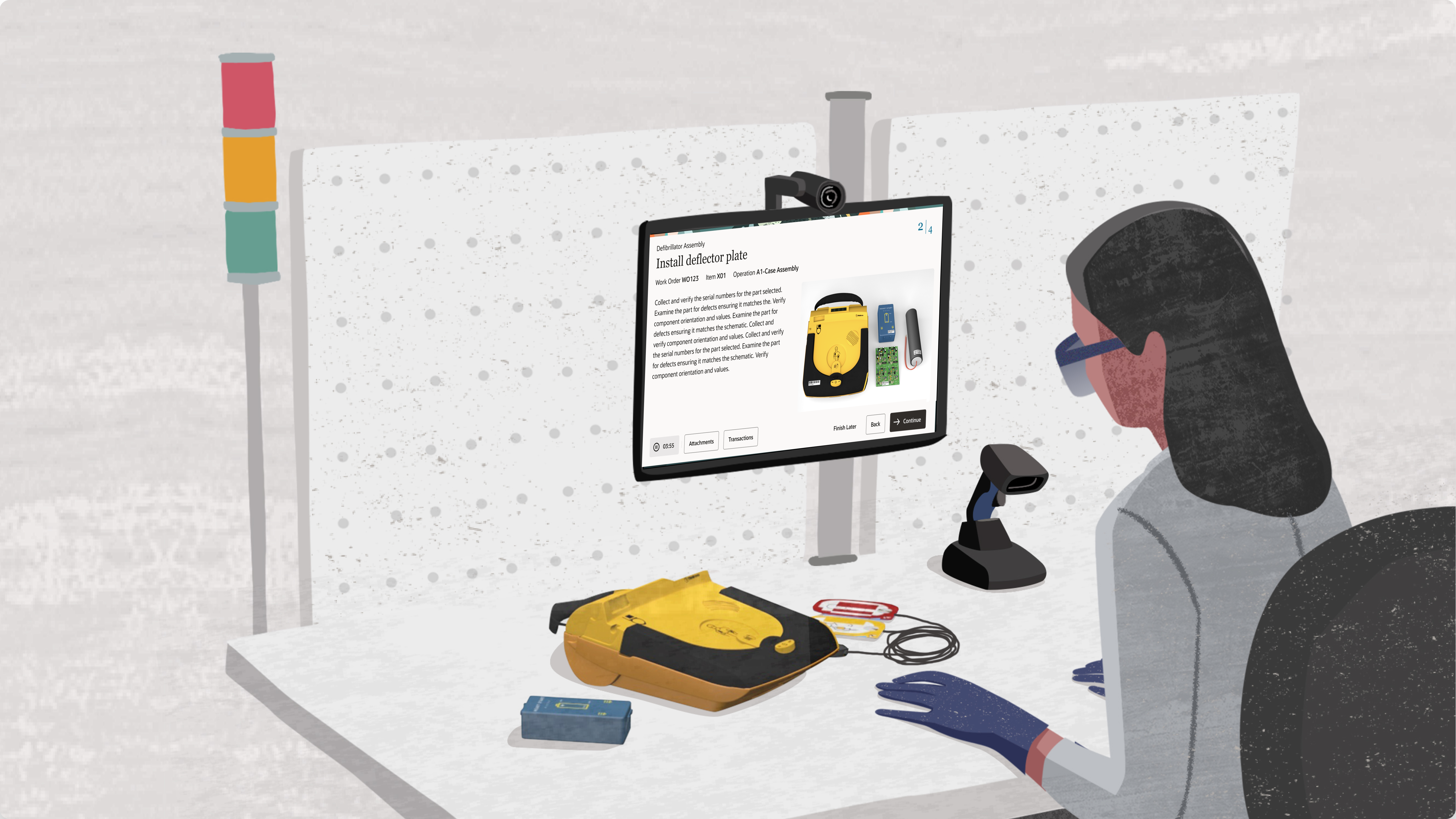
Production Operator Kiosk is a purpose-built interface for the factory floor within Oracle's SCM Execution suite. The Kiosk gives Production Operators a surface to execute manufacturing work orders on active production lines designed for the physical reality of PPE, gloves, and divided attention.
Production Operators were running manufacturing work orders from desktop terminals built for office use. In an environment of gloves, gear, and active production lines, every interaction created friction and the operator absorbed it.
I designed a net-new kiosk paradigm from first principles. Large touch targets, minimal cognitive load, and interaction patterns built for someone mid-task. The work moved from a Redwood audit through interaction modeling to high-fidelity, with one custom component (the Toolbar) designed where no existing pattern fit.
What started as a vision artifact became a production Redwood template — now the standard Oracle uses to build for the factory floor. The Toolbar, the one component without a prior pattern, survived the design system review as a net-new contribution available to other teams.
Oracle's SCM Execution suite is the operational backbone for manufacturers, powering the day-to-day execution of work on the floor.
Oracle's Supply Chain Management Execution suite powers the day-to-day operations of manufacturing companies including work orders, inventory, quality, and the people executing each step. Production Operators sit at the center of that work, physically running the line while the system tracks every action against the plan.
Leadership saw an opening: the factory floor was the next frontier for the suite, and no interface in the product was built for it. The Kiosk was the strategic bet on entering that environment.
Production Operators were running the floor on a desktop UI that was built for the office but deployed to the factory floor.
The existing interface assumed a stationary user with precision input and full attention. Operators had none of those things. They worked in PPE, gloves, safety gear, active production noise while interacting with mounted devices between physical tasks.
Every interaction designed for a mouse and keyboard became friction in that environment:
The operator absorbed all of it resulting in slower work, more errors, and a tool that never met them where they actually were.
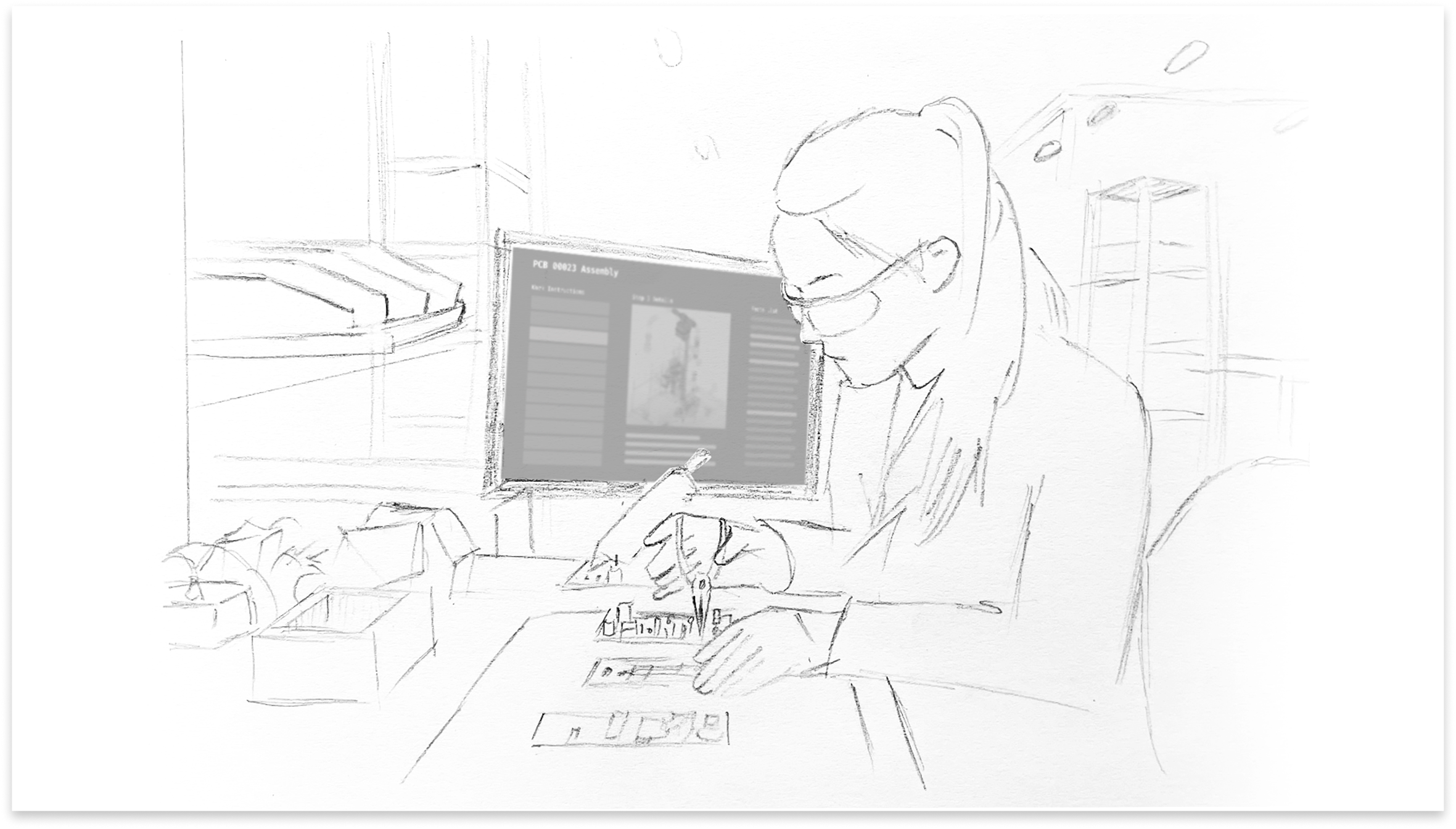
To design a kiosk-scale execution interface that meets Production Operators where they actually work on the floor, in PPE, mid-task rather than asking them to adapt to tools built for someone else's desk.
Design for the Body: Large touch targets, glove-friendly hit areas, and interaction patterns that work mid-task.
Reduce Cognitive Load: Surface only what the operator needs at this moment, not the full enterprise data model behind it.
Establish a Kiosk Paradigm: Define purpose-built interaction patterns that didn't yet exist in Redwood.
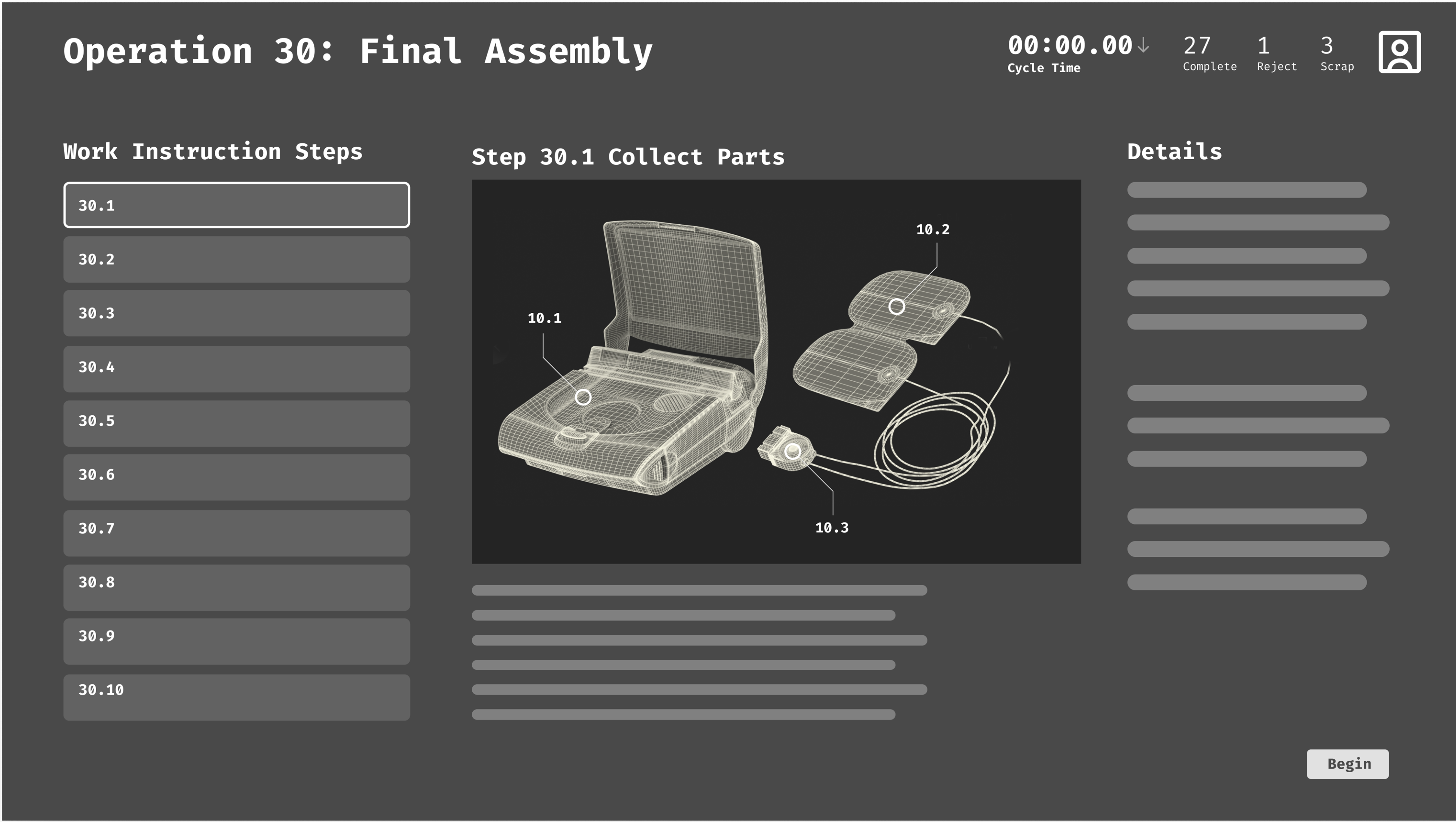
I ran an audit of Redwood's existing templates, conducted workflow research with Production Operators on the factory floor, and partnered with the Platform team to identify where Oracle's design system could absorb a new pattern — and where a custom approach was unavoidable.
No Pattern Fit. Redwood's existing templates were built for desk-bound enterprise work. None of the available options could absorb the kiosk's interaction model without breaking its own rules.
Attention Is the Constraint, Not Screen Space. The factory floor doesn't suffer from a lack of pixels. It suffers from a lack of focus. Designs had to win attention and communicate information in glances, not sessions.
One Net-New Component Was Enough. Most of the kiosk could be built from refining existing patterns, but the Toolbar had no precedent. Designing it as a custom component became the wedge into Oracle's Design System.
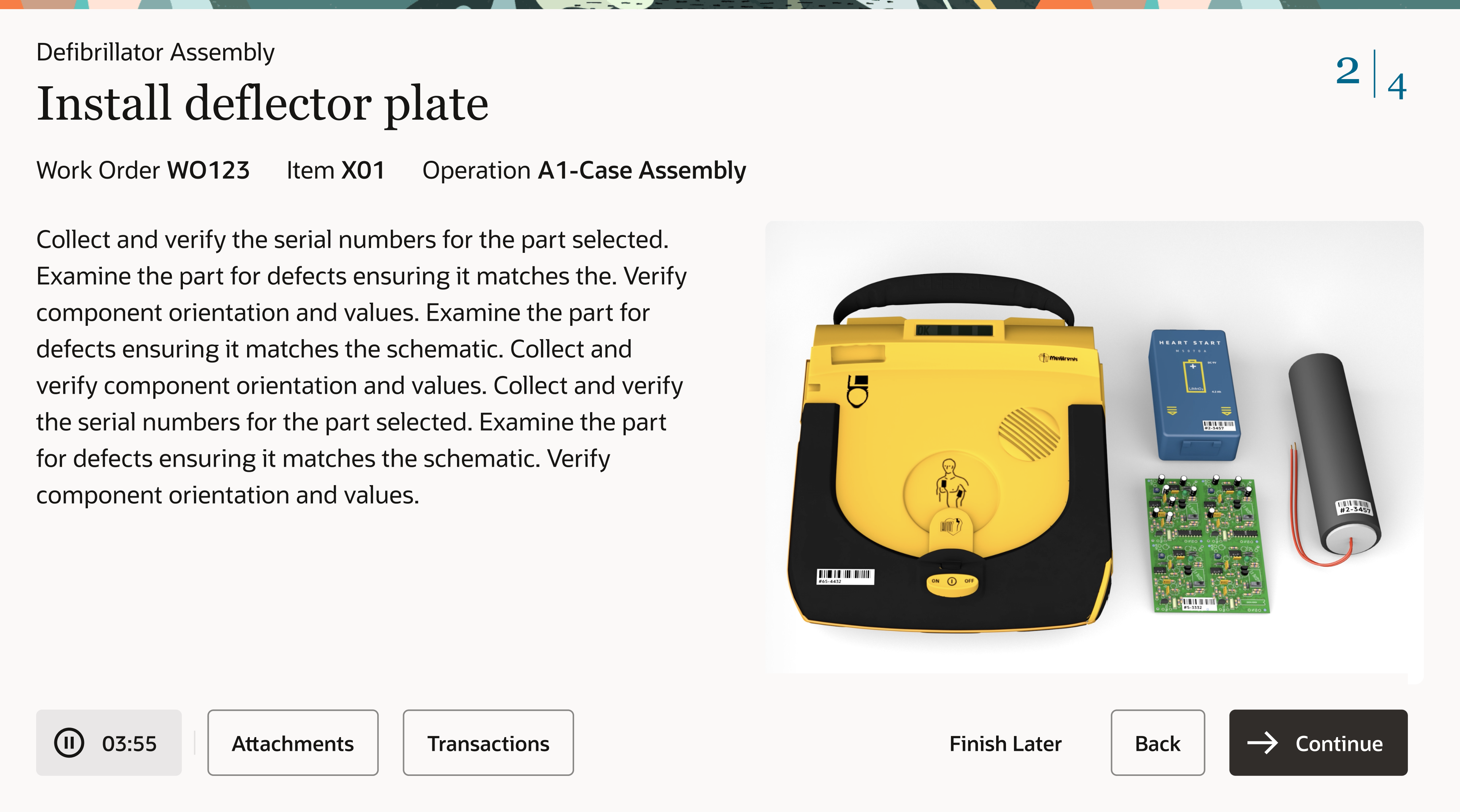
A purpose-built execution interface for the factory floor that gave Production Operators a surface designed for their environment (gloves, gear, and divided attention). More than a product, it extended Oracle's design system into industrial use for the first time.
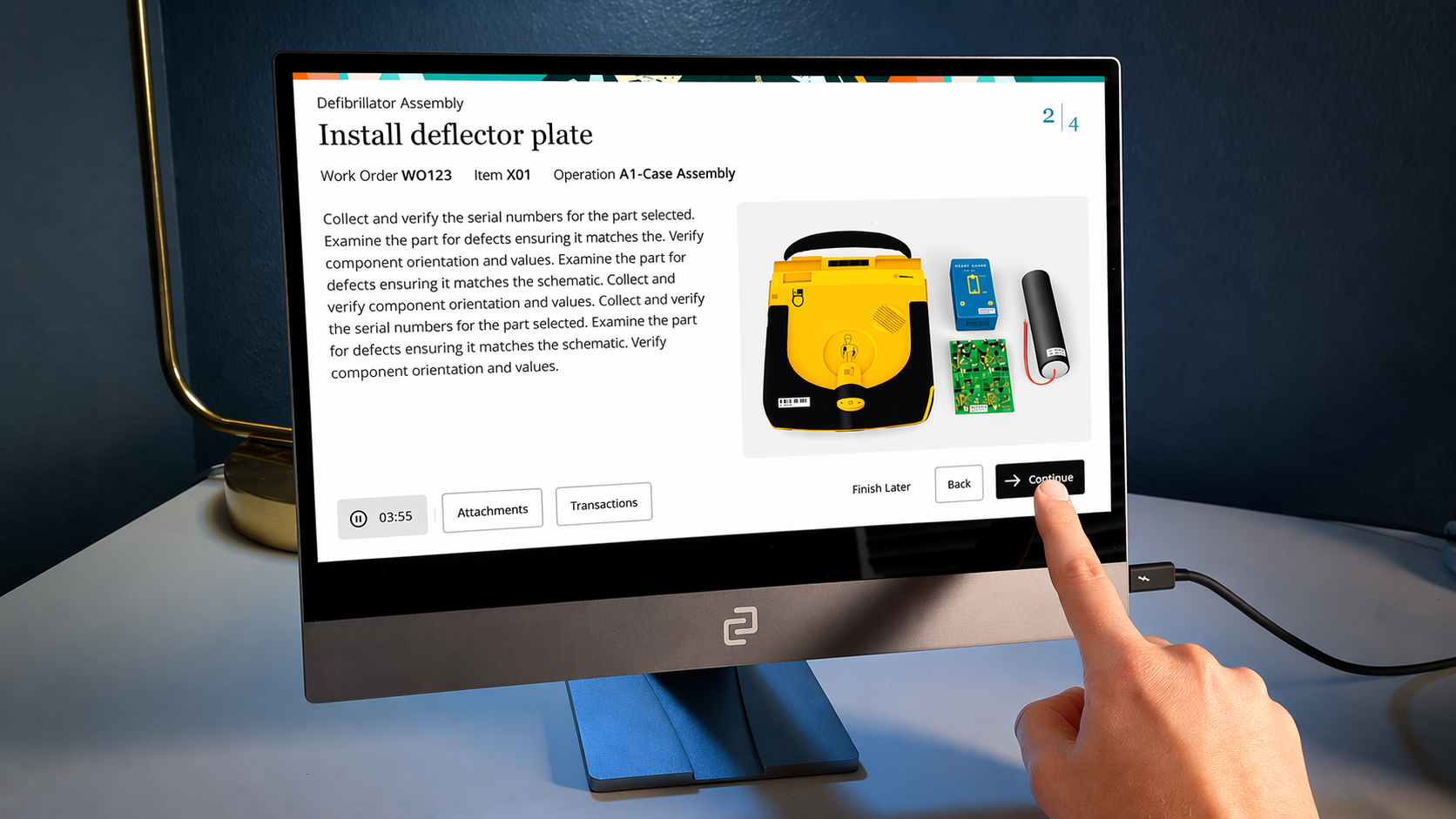
one surface, every action
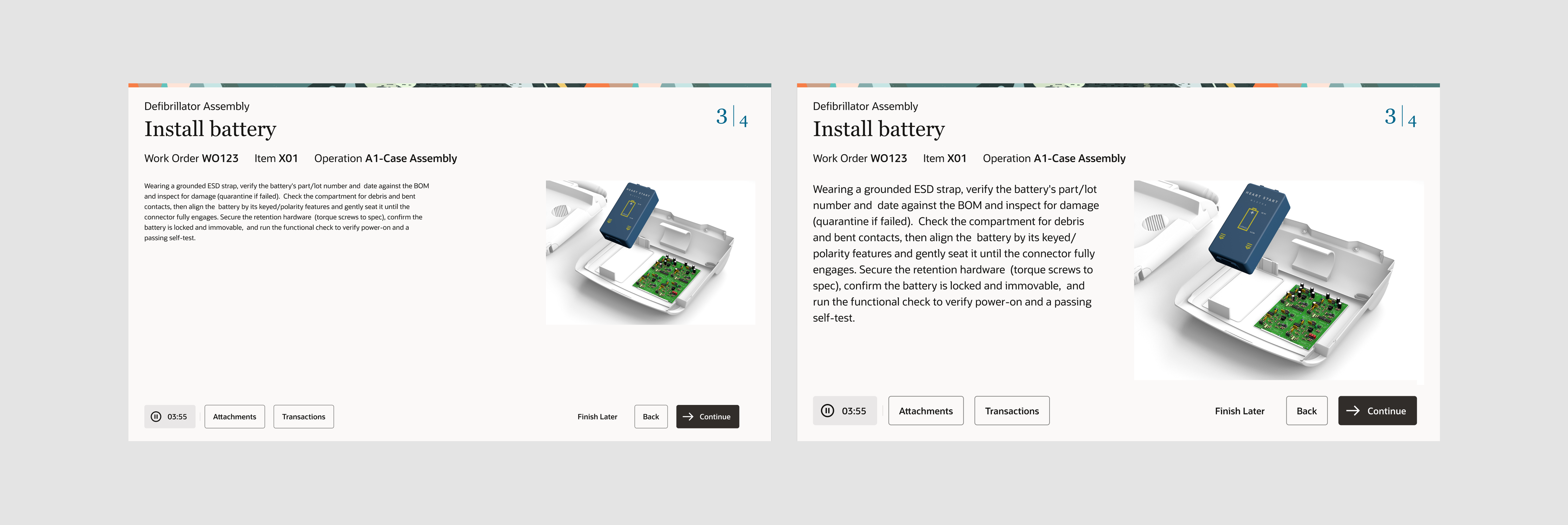
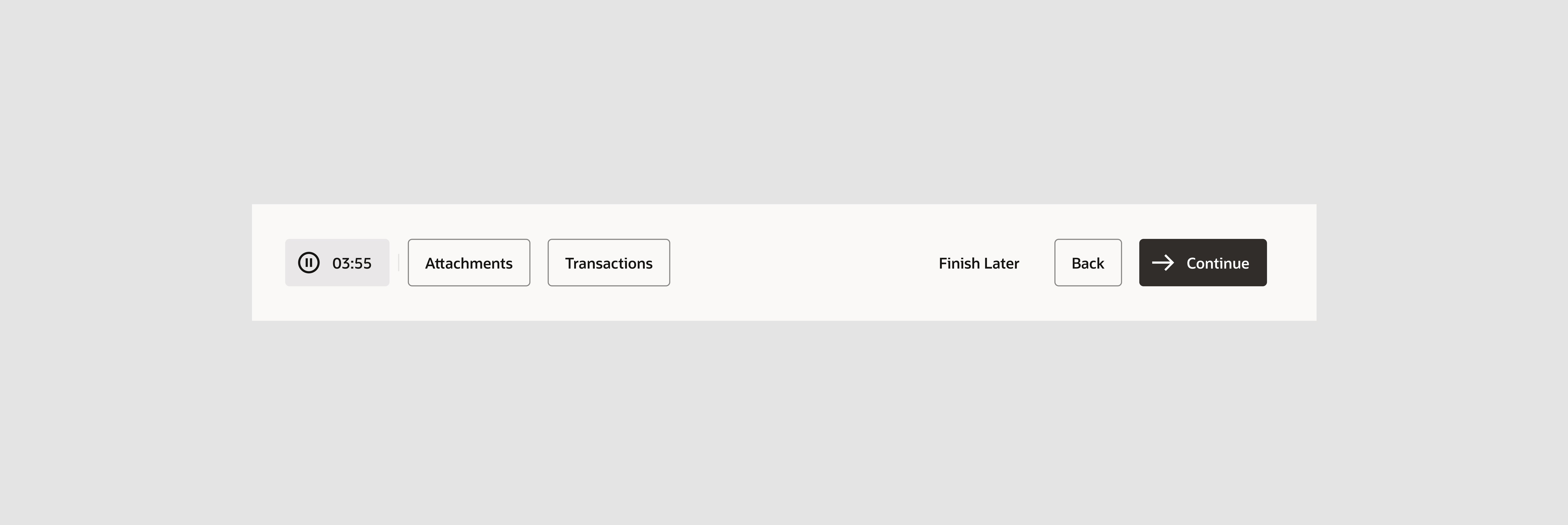
The Toolbar was the kiosk's single net-new contribution to Redwood. A persistent control surface designed to hold the operator's full set of actions without competing with the work itself. It consolidated scattered actions into one focused companion, sized for gloved hands and organized for mid-task glances. It was the only component in the kiosk without a prior pattern in Redwood, and the one that survived the design system review as a net-new pattern available to other industrial teams.
one design system, two environments
Designed in collaboration with the Platform team, the 1x / 2x switch is a configurable scaling mode built into Redwood's component layer. When set to 2x, every component (and its touch targets, spacing, type, hit areas) renders at kiosk scale, sized for gloved hands and arm's-length use on the factory floor. The switch let Oracle's design system serve two completely different physical environments without forking the codebase or building parallel kiosk components. It became the mechanism that made the kiosk shippable inside an enterprise design system originally built for the desktop.